XHJ News
Gas & Oil Fired Boilers Lead the Market
Time: 2026-07-23
Our many customers are inquiring about the same type of boiler equipment—gas-fired boilers, oil-fired boilers, or dual-fuel boilers. But why are more and more companies choosing dual-fuel boilers?
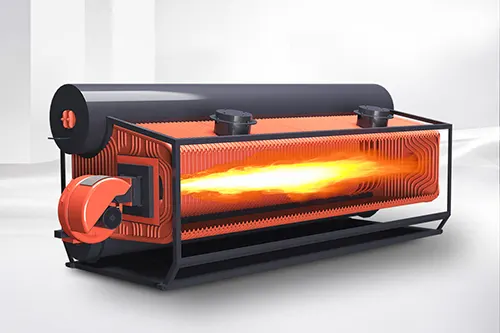
In recent years, dual-fuel boilers have gradually become the mainstream product in the global industrial boiler market due to their high efficiency, high level of automation, and stable operation. Especially in countries with well-developed natural gas infrastructure, gas-fired boilers have become the top choice for new construction projects at many industrial enterprises.
2. High level of automation: The PLC intelligent control system enables automatic ignition, automatic water replenishment, automatic operation, and fault alarms, significantly reducing labor costs.
3. More environmentally friendly emissions: Compared to traditional coal-fired boilers, gas boilers produce lower emissions and more easily meet local environmental regulations.
4. Easy Installation: With a compact overall design, these boilers require minimal floor space, feature a short installation cycle, and are easier to maintain.
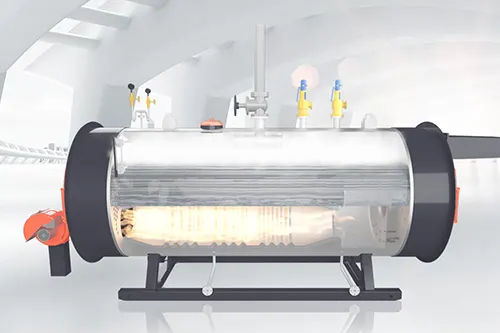
Gas and oil-fired boilers are suitable for a wide range of industries, including the food industry, pharmaceutical industry, hotels and hospitals, chemical plants, textile and dyeing facilities, dairy processing, and the building materials industry. Any industrial enterprise requiring steam or hot water can utilize gas or oil-fired boilers.
Of course, there are some situations where gas and oil-fired boilers are not suitable, such as in countries and regions where natural gas and oil are scarce. In such cases, operating costs would be very high, so decisions must be made based on local conditions.
With the global adjustment of energy structures and the continued maturation of high-efficiency, low-nitrogen combustion technologies, gas and oil-fired boilers will continue to see steady growth in the future. At the same time, smart control, remote monitoring, and high-efficiency energy-saving technologies will also become key directions for the industry’s development.
In recent years, dual-fuel boilers have gradually become the mainstream product in the global industrial boiler market due to their high efficiency, high level of automation, and stable operation. Especially in countries with well-developed natural gas infrastructure, gas-fired boilers have become the top choice for new construction projects at many industrial enterprises.
Gas- and Oil-Fired Boilers Advantages
1. High thermal efficiency: Advanced combustion technology ensures complete combustion, improving energy utilization.2. High level of automation: The PLC intelligent control system enables automatic ignition, automatic water replenishment, automatic operation, and fault alarms, significantly reducing labor costs.
3. More environmentally friendly emissions: Compared to traditional coal-fired boilers, gas boilers produce lower emissions and more easily meet local environmental regulations.
4. Easy Installation: With a compact overall design, these boilers require minimal floor space, feature a short installation cycle, and are easier to maintain.
Gas and oil-fired boilers are suitable for a wide range of industries, including the food industry, pharmaceutical industry, hotels and hospitals, chemical plants, textile and dyeing facilities, dairy processing, and the building materials industry. Any industrial enterprise requiring steam or hot water can utilize gas or oil-fired boilers.
Of course, there are some situations where gas and oil-fired boilers are not suitable, such as in countries and regions where natural gas and oil are scarce. In such cases, operating costs would be very high, so decisions must be made based on local conditions.
With the global adjustment of energy structures and the continued maturation of high-efficiency, low-nitrogen combustion technologies, gas and oil-fired boilers will continue to see steady growth in the future. At the same time, smart control, remote monitoring, and high-efficiency energy-saving technologies will also become key directions for the industry’s development.
- LPG fired hot water boiler supplier2026-07-24
- Gas & Oil Fired Boilers Lead the Market2026-07-23
- Industiral Boiler Types2019-06-13
- Wood Pellet Boiler2019-06-12
- 1-90 ton natural gas boiler2019-01-17
- 5 ton industrial boiler types2019-01-14
- 8 ton boiler introduction2019-01-07
- Diesel oil fired boiler2019-01-04
- Oil and gas boiler2019-01-04
- 30-40 ton steam boiler2019-01-02
Request a quotation